
What to Expect from the RYA Day Skipper Practical Course
Five days aboard a cruising yacht separate a confident crew member from a Day Skipper. What the course asks of you before you arrive, what fills the week, and how the instructor decides you have passed.
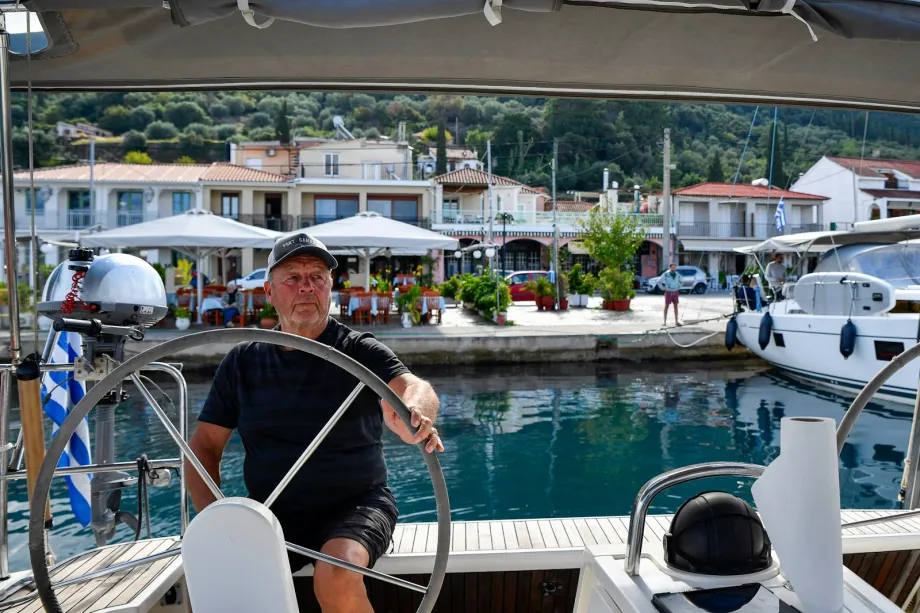
Target sailors and entry requirements
The Day Skipper practical course turns experienced crew members into skippers capable of taking a small yacht out in familiar tidal waters by day. Many charter companies ask for it, or for the International Certificate of Competence that it can lead to, before they hand over a boat.
To join the course, you need a basic foundation of sea time. Candidates must have logged at least five days aboard, covered 100 nautical miles, and completed four night hours. The minimum age to receive the certificate is 16. You also need sound navigational knowledge before arriving at the marina. Trying to learn chartwork while living on a rolling boat leads to frustration. Candidates should hold the Day Skipper Theory qualification or have equivalent knowledge of tidal calculations, chart symbols, position fixing, and collision regulations.
Theory before practical work
Practical instructors spend time on the water, not behind a desk in a classroom. They expect you to understand how to calculate height of tide, allowance for leeway, and estimated positions before you leave the pontoon.
Revise tidal curves and the collision regulations, especially the sailing rules, before you arrive. Make sure you can read a paper chart quickly without searching for basic symbols. You will apply these skills in real time while steering or managing crew. If your theoretical knowledge has faded, spend time with a chartwork workbook or an online refresher. Time spent revising onshore makes the physical boat handling much easier to manage.
Five days aboard: core practical skills
A standard course lasts five days. You live aboard a cruising yacht with an instructor and up to four other candidates. Life on board is active and shared. Everyone takes turns cooking, cleaning decks, keeping watch, and acting as skipper.
Passage planning and skippering
Each candidate takes charge of the yacht for at least one full passage. As skipper, you prepare the passage plan, brief the crew on safety, check the engine, and make key navigational decisions. You must factor in tidal gates, weather forecasts, hazard clearance, and crew comfort.
Taking command feels unfamiliar if you are used to taking orders from others. The instructor stands back and lets you manage the boat, stepping in only if safety is compromised. You learn to give clear commands to the helm, delegate deck tasks, and monitor your position against the written plan.
Boat handling under sail and power
Handling a yacht in tight spaces requires understanding wind and water flow. A large proportion of time goes into handling the vessel in marina environments and under sail near land.
Under power, you practise berthing alongside pontoons, springing off walls, and turning in confined fairways. You learn how propeller walk and wind affect the hull at slow speeds. Under sail, the focus shifts to tacking, gybing, reefing, and picking up mooring buoys under sail alone without starting the engine.
Pilotage in practice
Navigating open sea is straightforward compared to entering an unfamiliar harbour. Pilotage requires leading the boat safely into port using visual markers, depth sounders, and transit lines.
You write down a pilotage plan before approaching the harbour entrance. This plan lists buoy names, light characteristics, danger bearings, and safe depths. While helming or directing your crew, you must identify landmarks quickly and execute the plan without spending all your time looking down at paper charts or screens.
Night sailing and emergency procedures
The course includes at least four hours of night sailing. Operating in the dark changes your perspective entirely. Distances become harder to judge, and shore lights obscure navigation aids. You learn to identify light characteristics of buoys and vessels, use sector lights, and maintain visual orientation.
Emergency drills repeat throughout the week. Man Overboard (MOB) recovery is the primary safety exercise. You practise returning to a lost object under power and under sail. The instructor drops a marker into the water without warning. You must bring the yacht alongside the marker safely, stop the vessel, and coordinate the crew to recover it. Other safety topics include gas safety, engine checks, flares, and distress communications.
Continuous assessment throughout the week
There is no formal written exam at the end of the five days. Assessment is continuous from the moment you step aboard until the final debrief.
The instructor evaluates your seamanship, command skills, safety awareness, and technical execution across every exercise. Making a mistake does not mean automatic failure. What matters is how quickly you recognise an error, correct it safely, and maintain control of the vessel. Daily debriefs give clear feedback on areas that need improvement before your next turn as skipper. If you meet the required syllabus standard, you receive your practical certificate at the end of the course.
Skills to practise after qualifying
Passing the course gives you a recognised certificate and a practical foundation, but confidence comes with experience. New Day Skippers should build their hours gradually rather than jumping straight into long passages.
Charter a small yacht in familiar, sheltered waters for your first trip as skipper. Keep passages short and choose harbours with straightforward approaches. Practise berthing in quiet marinas early in the morning when wind and tide are calm. Continue refining your passage planning and pilotage techniques on every voyage. The more hours you log as skipper, the more comfortable you become managing unpredictable weather and crew dynamics.
Frequently asked questions
What prerequisites do I need for the Day Skipper practical course?
You need at least five days at sea, 100 nautical miles logged, and four night hours. You must also have theoretical knowledge equal to the Day Skipper Theory course.
Is there a formal exam at the end of the course?
No formal exam exists for this course. Assessment is continuous throughout the five days, based on your practical skills, decision-making, and command of the boat.
Can I skipper a boat commercially after passing?
The basic practical certificate allows you to skipper a boat recreationally. To skipper commercially, you must add a commercial endorsement, which requires additional medical and safety training.
What happens if the weather is bad during the week?
Instructors adapt the itinerary to match local weather conditions. You will learn how to make realistic skipper decisions when conditions change.