Where can you anchor on the Helford River?
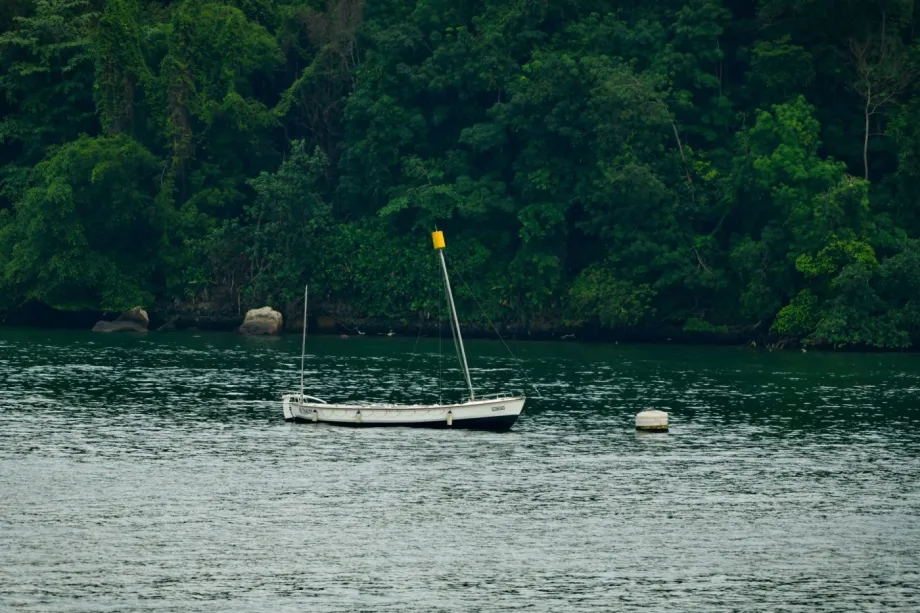
The Helford dries to mud over much of its width at low water, so the anchorages that work overnight sit in the deeper, sheltered pools between Helford Passage and the village of Helford. Holding is mostly soft mud and weed, which a well-set plough or Delta anchor holds reliably once it has dug in.
Choose your spot by the depth you need at low water and by the south-easterly swell in the forecast.
- Off Helford Passage the pool is wide and popular, with good shelter from the west and room to swing.
- Inside Frenchman's Creek the water is quiet and shallow, best for a settled night and a shoal-draft boat.
- Near the village of Helford the channel narrows and the moorings crowd it, so anchor clear of the trots.
- Upstream towards Gweek the river dries almost completely, so only a shoal-draft boat can reach it on a rising tide.
- At the mouth, off the bar, the water is deeper but more exposed to a southerly swell.
Give the anchor plenty of scope in the mud and check the transits before you settle; the ebb runs briskly through the narrows.
How do visitor moorings on the Helford work?
Most swinging moorings on the Helford belong to local sailing clubs, boatyards and the harbour authority, and those owners let them to visitors when the berth is free. An empty buoy is not a free buoy. Look for a tag or a name on the pick-up, and treat an unmarked mooring as taken.
Ask before you pick up. Call the yard or club on VHF, or row across in the dinghy and speak to whoever is on the pontoon. They will tell you which buoys are free, what draft they take and where the owner wants you to lie. The harbour authority publishes visitor mooring information for the river, so check it before you arrive.
- Confirm the buoy is let to visitors and note its number.
- Check the stated maximum length and draft for that mooring.
- Ask about the dinghy landing and where you may leave it.
- Find out the leaving time on your last morning.
- Pay the owner directly and keep the receipt on board.
How do the tides and the bar affect you?
The Helford entrance dries to a shallow bar at the mouth, so cross it near high water, never on a falling tide. The window is roughly two hours either side of high water for a fin keel yacht drawing around 1.8 m, and less on spring lows. A bilge keeler or a lifting keel opens the window wider.
Inside, the ebb runs hard through the narrows between the entrance and the first moorings. It pushes against you on the way in, so arrive with the flood to keep steerage and time to pick a spot. Entering against the last of the ebb costs you speed where the channel is tightest.
- Cross the bar on the flood or at high water, never on the last of the ebb.
- Allow for the ebb in the narrows when you time your approach.
- Check the tide table for the day, not a week ahead.
- Keep clear of the channel when you anchor or pick up a mooring.
How do you plan a short passage to the Helford?
From Falmouth the run to the Helford entrance at Nare Point is about 6 nautical miles, so most crews reach the river in 1-2 hours under sail. Leave Falmouth on the last of the flood or at high water and carry the ebb west, which keeps you clear of the Manacles tide race to the south.
Plan the timing backwards. You want to enter the Helford with enough light to pick up a mooring, and the ebb runs hard across the entrance for 2-3 hours after high water. A fair tide from the Carrick Roads usually gets you to the river mouth within one tide, so plan a daylight arrival rather than a night approach.
Keep a backup in mind. If the wind goes southwest and builds, the entrance and the inner reaches become uncomfortable, and Falmouth, the Fal or the shelter of the Carrick Roads give you a straightforward fallback. Sail on to the Isles of Scilly only in settled weather and with a proper passage plan, since that leg is open water with no easy bail-out.
What is there to do ashore and afloat?
Helford village sits on the north bank near the ferry, with a pub, a sailing club and a few cottages around a small quay. Helford Passage faces it on the south side, and a passenger ferry crosses between the two in season. From Helford Passage a footpath runs east to Glendurgan Garden, a National Trust valley garden with a laurel maze, and Trebah Garden lies a short walk further west along the lane.
On the water the river suits dinghies and kayaks more than long passages. Kayak traffic is heaviest off Helford Passage and around the moorings at high water, so keep a lookout when you row or paddle between the boat and the shore. A simple day out is to take the ferry across, walk to one of the gardens and return on the ebb.
- Helford village: pub, sailing club and the ferry landing on the north bank.
- Helford Passage: ferry slip, beach and the start of the creekside footpath.
- Glendurgan Garden: National Trust garden with a maze above the Helford.
- Trebah Garden: valley garden with a beach at the head of its own cove.
- Frenchman's Creek: a quiet wooded creek to explore by dinghy near high water.
What should you watch out for?
The Helford is shallow above the moorings and busy with small craft in summer, so the risks are depth, unlit gear and traffic, not the entrance itself. Plan to arrive in daylight and keep a sounding lead or echo sounder running as you work upriver.
- Unlit moorings sit off the main channel and are hard to see after dusk, so keep your speed down and post a lookout forward.
- Pot buoys and floating line foul props, especially near the mooring trots and the river edges.
- Shallow patches lie between the moorings and the upper reaches, where the charted depth falls away quickly.
- Dinghies, kayaks and dayboats cross the channel through the summer, often without looking.
- The upper river has no all-tide facilities, so fill water and fuel downriver before you head up.
Keep clear of the ferry and working boats at their moorings, and allow for the ebb running against you on the way back out. A slow, steady approach leaves room to react.
Frequently asked questions
Can you anchor overnight on the Helford River?
Yes. Several sheltered spots in the wider part of the river take a night anchorage in settled weather. Pick a spot clear of moorings and pot buoys, check the depth at low water and be ready to move if the wind goes against the tide.
Do you need to pay for a mooring on the Helford?
You do if the buoy belongs to a club, a yard or the harbour authority, and most of them do. Ask the owner before you pick one up, by VHF or in person, and expect to be directed to a visitor buoy instead.
Is the Helford River suitable for a first charter?
It can be, in fair weather and with a skipper who has read the pilot. The entrance is shallow and tidal, and the river is full of moored boats and small craft. A short hop from Falmouth with a favourable tide is the easier introduction.
How long does it take to sail from Falmouth to the Helford?
The passage is short, a few hours at a cruising speed, and the timing matters more than the distance. Leave so that you arrive at the entrance with enough water, and allow for the tide setting you along or against the course.